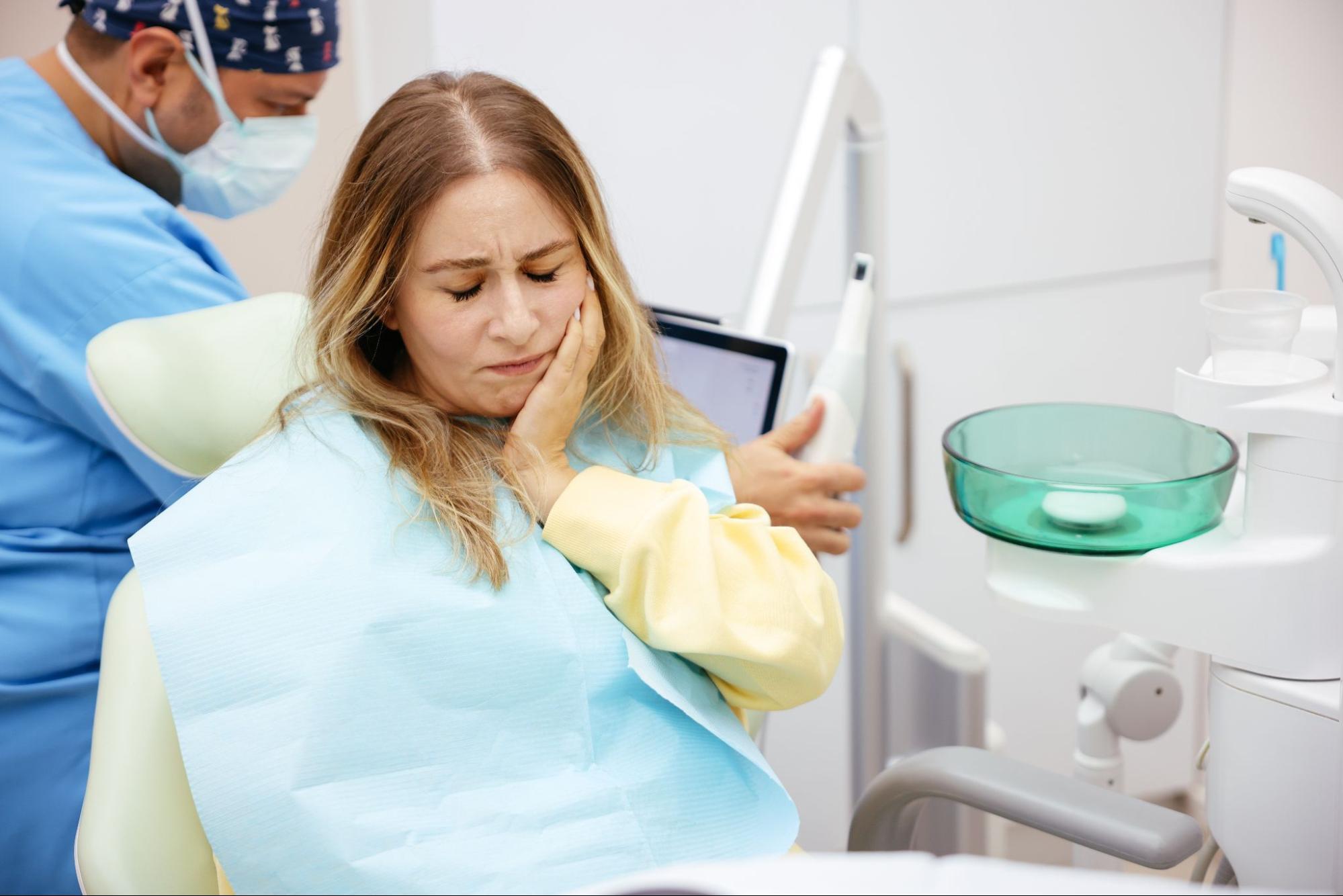
Jaw pain can make everyday moments, chewing, talking, even yawning, feel like a challenge. If you’ve been wondering whether orthodontic care could ease that jaw discomfort, you’re asking a good question. At Johnson Orthodontics, serving Huntsville and Hampton Cove, we hear this often, and the answer depends on what’s actually driving your symptoms.
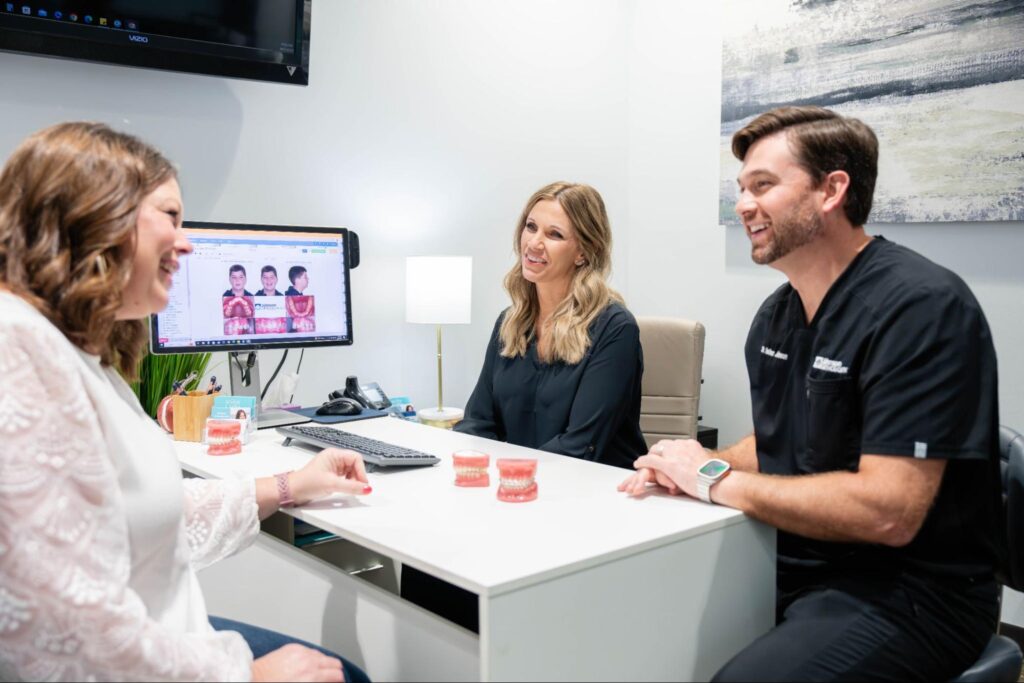
What Is the Connection Between Orthodontics and TMJ?
Orthodontic treatment improves jaw pain or TMJ issues when a misaligned bite contributes to joint strain. The temporomandibular joint (TMJ) connects your jaw to your skull, and when your bite doesn’t line up properly, that joint works harder than it should. Straightening teeth and correcting the bite reduces that stress in many cases.
TMJ disorder (sometimes called TMD) shows up in a few common ways:
- Jaw tenderness or discomfort
- Clicking or popping when you open your mouth
- Limited jaw movement or locking
- Headaches, earaches, or facial soreness
Here’s the nuance. Malocclusion, meaning a bad bite, is one possible contributor to TMJ symptoms, but it’s rarely the only one. Stress, teeth grinding, jaw injuries, and arthritis all play a role. Orthodontics addresses tooth and jaw alignment. It doesn’t treat the joint itself directly.
Research on the link between orthodontic care and TMJ relief is mixed. According to the American Association of Orthodontists (AAO), orthodontic treatment isn’t a guaranteed cure for TMJ disorders, but correcting an underlying bite issue reduces the mechanical stress that fuels symptoms. That’s why a careful evaluation with Dr. Johnson matters before assuming braces or Invisalign will solve the puzzle.
How Orthodontic Treatment May Help Jaw Pain
Orthodontic treatment helps jaw pain by correcting bite issues that force your jaw joint and muscles to overwork. When teeth meet evenly, chewing forces distribute more naturally across the mouth. This reduces muscle tension, eases pressure on the TMJ, and lessens the bite interference that often triggers grinding or clenching.
Several bite issues are commonly linked to jaw discomfort:
- Crossbite pulls the jaw to one side, straining muscles
- Overbite or deep bite pushes the lower jaw backward, compressing the joint
- Open bite forces muscles to work harder for basic function
- Crowding creates uneven pressure points during chewing
When Dr. Johnson corrects these issues, the goal is a bite that closes evenly and comfortably. That balance often takes stress off the surrounding muscles and joint, and it’s rewarding to watch our family members feel the difference.
Here’s what the process typically looks like at Johnson Orthodontics:
- Evaluation. Dr. Johnson examines your bite, jaw function, and symptoms during your free consultation, the first step to start your smile journey.
- Imaging and digital scans. We use digital scanning technology to map your teeth and jaw with precision.
- Custom treatment plan. Dr. Johnson designs an approach using metal braces, clear braces, or Invisalign based on your needs.
- Gradual repositioning. Teeth move steadily over months, guided by follow-up visits every 4-8 weeks.
- Retention. Once your bite is corrected, retainers protect the new alignment.
Potential Benefits of Orthodontics for TMJ Symptoms
When bite misalignment is a real contributor to your jaw discomfort, orthodontic care offers meaningful improvements. Many of our family members notice wonderful changes that go well beyond just a straighter smile.
Possible benefits include:
- Reduced jaw and facial muscle strain. Even bite pressure means muscles aren’t compensating for uneven contact.
- Fewer tension headaches. When headaches are driven by bite interference, correcting the alignment helps.
- Improved chewing comfort. Food breaks down more easily when teeth meet properly, and meals feel enjoyable again.
- Better long-term dental and joint health. Balanced forces protect enamel and reduce wear on the TMJ.
- A straighter smile. The cosmetic upgrade is a happy bonus to functional relief.
These aren’t guaranteed outcomes for every case. But when malocclusion is part of the picture, addressing it makes a real difference in daily comfort, and that’s something worth smiling about.
Orthodontics vs. Other TMJ Treatments
TMJ care isn’t one-size-fits-all. Different treatments target different causes, and sometimes the best approach combines a few. Here’s how orthodontics compares to other common options.
| Treatment | Best For | How It Works |
|---|---|---|
| Orthodontics | Bite-related TMJ symptoms | Corrects tooth and jaw alignment to reduce joint strain |
| Night guards / splints | Grinding, clenching, mild symptoms | Cushions teeth and repositions jaw during sleep |
| Physical therapy | Muscle tension, limited movement | Stretches and strengthens jaw muscles |
| Medication | Inflammation, short-term relief | Reduces swelling and discomfort |
| Joint procedures | Severe structural joint issues | Reserved for cases that don’t respond to conservative care |
Night guards manage symptoms by protecting teeth and easing muscle tension, but they don’t correct an uneven bite. Orthodontics addresses the underlying cause when malocclusion is the trigger. Splint therapy is sometimes used before or alongside orthodontic care to stabilize the jaw and get a clearer read on the bite.
Advanced joint procedures are rare and reserved for severe joint issues that conservative treatments can’t resolve. For most people, orthodontics is the right call when bite alignment is a contributing factor to jaw discomfort. Dr. Johnson helps you sort out which combination makes sense for your situation, so you never have to guess about the path forward.

Cost Factors for TMJ-Related Orthodontic Treatment
The cost of TMJ-related orthodontic treatment varies based on the treatment you choose, the complexity of your case, and how long treatment takes. Metal braces, clear braces, and Invisalign each have different price points, and additional diagnostic work or complementary therapies influence the total.
Key factors that affect cost:
- Treatment type. Metal braces are often the most budget-friendly option, while Invisalign and clear braces cost more.
- Case complexity. Correcting a significant crossbite or deep bite generally takes longer than minor adjustments.
- Treatment length. Most cases run 12-24 months, and longer treatment typically means higher cost.
- Diagnostic imaging and consultations. Digital scans and initial evaluations are part of the plan.
- Additional TMJ therapies. If a night guard or splint is recommended alongside orthodontics, that adds to the total.
Insurance coverage varies. Some plans cover part of orthodontic care, especially when it’s considered medically necessary for TMJ or bite issues. Call your provider to check the specifics of your policy, since coverage details differ widely from one plan to the next.
Johnson Orthodontics offers flexible payment options to help make care more accessible for your family’s budget. During your free consultation, we’ll walk you through what your specific treatment plan looks like and answer any cost questions upfront so you feel fully informed before deciding anything.
Who Is a Candidate for TMJ Orthodontic Treatment?
Not everyone with jaw discomfort is a candidate for orthodontic care. The best fit is someone whose symptoms are clearly tied to a bite issue. Dr. Johnson evaluates whether malocclusion is contributing to your discomfort before recommending treatment.
You may be a good candidate if:
- Your TMJ symptoms line up with a crossbite, overbite, open bite, or crowding
- Chewing feels uneven or you notice your jaw shifting to one side
- You experience clicking, popping, or muscle strain that worsens with bite pressure
- You’re an adult, teen, or child whose bite could benefit from correction
Orthodontics may not be the primary answer if your TMJ issues stem solely from stress, arthritis, or a past injury without a bite component. In those cases, other treatments often take the lead, and orthodontics plays a supporting role or isn’t needed at all.
The only way to know for sure is a professional evaluation. At Johnson Orthodontics, Dr. Johnson takes the time to understand what’s driving your symptoms before suggesting any treatment path, because you’re not just a patient, you’re part of our family.
Frequently Asked Questions
Can braces resolve TMJ discomfort permanently?
Braces offer lasting relief when TMJ discomfort is directly tied to bite misalignment. Once your bite is corrected and stabilized with retainers, the mechanical stress that contributed to symptoms is reduced long-term. However, if other factors like stress, grinding, or arthritis are involved, additional care may be needed alongside orthodontics.
How long until orthodontics relieves jaw discomfort?
Timelines vary based on your specific case. Some family members notice reduced tension within the first few months as their bite begins to improve. More noticeable relief often comes as treatment progresses and the bite reaches proper alignment, which typically takes 12-24 months. Dr. Johnson gives you a personalized estimate during your evaluation.
Does Invisalign help with TMJ?
Invisalign helps with TMJ symptoms when they’re linked to bite issues that clear aligners can correct. Invisalign moves teeth into better alignment much like braces do, and the aligners themselves act somewhat like a light splint during wear. Dr. Nathan Johnson is a platinum Invisalign® provider and determines whether Invisalign is the right approach for your case.
Can orthodontic treatment cause TMJ problems?
Properly planned orthodontic treatment shouldn’t cause TMJ problems. In fact, the goal is the opposite. Some family members experience temporary jaw soreness as teeth shift, which is normal and usually settles quickly. Dr. Johnson monitors your progress carefully at each visit to make sure your bite is moving in the right direction.
Should I get a night guard or braces first?
It depends on what’s driving your symptoms. If grinding or clenching is the main issue, a night guard may be the first step. If bite misalignment is the underlying cause, orthodontics is often the better long-term solution. Sometimes both are used together. A free consultation with Dr. Nathan Johnson, a member of the American Association of Orthodontists, helps you figure out the right order for your situation. He and his team take the time to listen to your symptoms, evaluate your bite, and explain your options clearly, so you always feel confident about the next step in creating healthy, happy smiles for your whole family.