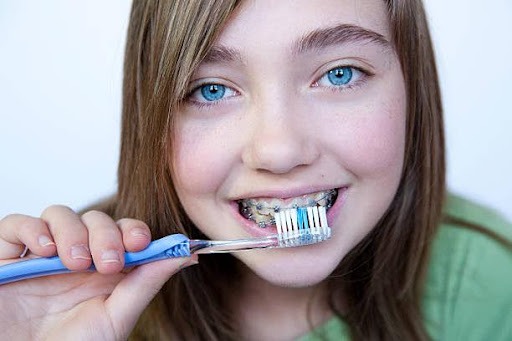
Braces create dozens of small spaces where food and bacteria can collect throughout the day. Because brackets, wires, and bands trap particles that normal brushing can miss, patients with braces usually need to brush after meals and snacks instead of only morning and night. More frequent brushing helps protect enamel, reduce plaque buildup, and support healthier gums during treatment.
What Makes Brushing With Braces Different?
Braces add new surfaces where food particles and bacteria hide. Brackets, wires, and bands form tiny traps that your toothbrush can easily miss during a standard two-minute session. That is why brushing twice a day often is not enough during orthodontic treatment.
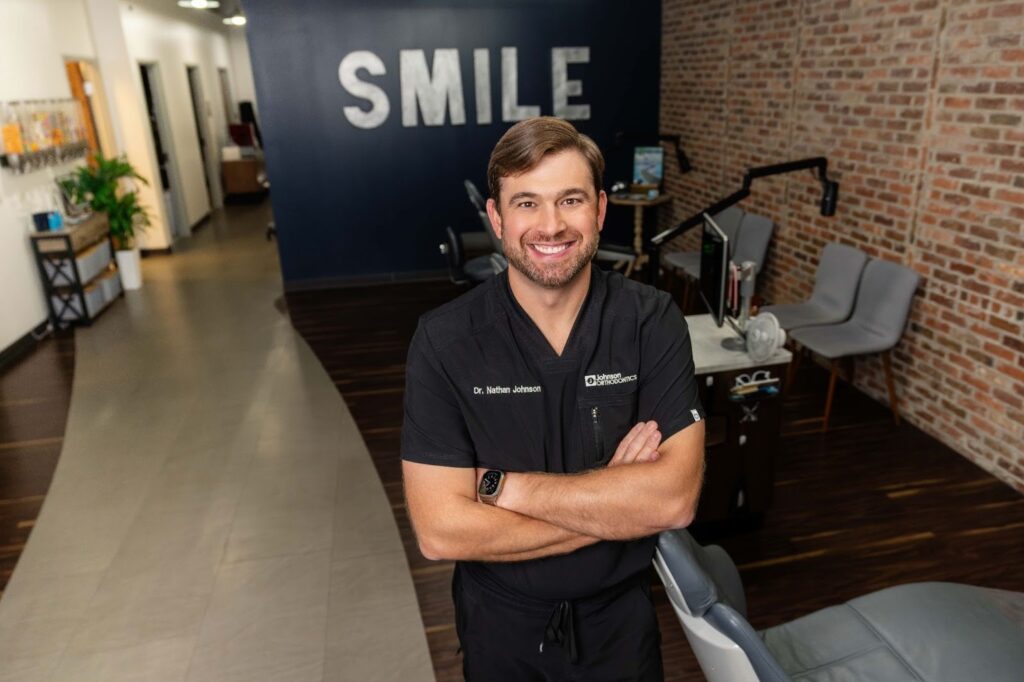
Dr. Nathan Johnson and the team at Johnson Orthodontics recommend brushing after meals and snacks while wearing braces. Patients in Huntsville braces treatment need to be especially consistent, particularly if sports drinks, sugary beverages, or frequent snacks are part of their daily routine.
Think of your brackets like speed bumps for your toothbrush. Food that might normally wash away with saliva gets stuck in these smaller spaces instead. Without more frequent brushing, bacteria have more opportunities to stay active around your braces.

How Plaque Buildup Happens Around Braces
Plaque builds up faster around braces because brackets and wires trap food particles that feed bacteria. These particles can lodge between brackets, under wires, and along the gumline. Bacteria then feed on them and produce acids that can irritate gums and weaken enamel over time.
That sticky film of bacteria, known as plaque, can harden into tartar if it is not removed regularly. Once tartar forms, it cannot be brushed away at home and usually needs to be removed by a dental professional.
Demineralization can also begin faster than many patients realize. You may notice it as white spots around brackets, where acids have started to affect the enamel. The team at Johnson Orthodontics checks for early plaque buildup during regular visits so problems can be addressed early.
Frequent brushing interrupts this cycle before damage has a chance to build. Brushing after meals removes food particles before bacteria can continue feeding on them, which helps reduce plaque formation and protects enamel.
Your mouth often gives warning signs, too. If your gums bleed when you brush or you notice bad breath that does not improve, plaque may already be building up. Increasing your brushing frequency can help get you back on track.
Benefits of Brushing More Often During Orthodontic Treatment
Consistent brushing throughout treatment can make a major difference in the health and appearance of your smile.
Helps Prevent White Spot Lesions
Brushing after meals helps remove acid-producing bacteria before they can continue affecting enamel. Those chalky white marks around brackets can be difficult to reverse once they form, so prevention matters.
Reduces Cavity Risk
Frequent brushing helps reduce cavity risk by removing the food particles and plaque bacteria rely on. Patients who stay consistent with brushing throughout treatment often finish with healthier teeth overall.
Protects Your Gums During Treatment
Gingivitis is common during orthodontic treatment when plaque sits too long around braces. Regular brushing helps keep gums healthier and can reduce redness, swelling, and bleeding.
Improves Breath
Brushing after meals removes trapped food particles that can contribute to bad breath, rather than only masking odor with gum or mints.
Keeps Treatment Moving Smoothly
Poor hygiene can lead to swollen gums or cavities that make visits more uncomfortable and may interrupt treatment. Good brushing habits help keep your progress on schedule.
Supports a Healthier Smile When Braces Come Off
When braces are removed, you want to see healthy enamel underneath. Better brushing throughout treatment helps protect the smile you are working toward.
How Does Brushing With Braces Compare to Brushing Without?
With braces, you usually need to brush more often, spend more time per session, and use a few extra tools to clean around brackets and wires.
| Aspect | Without Braces | With Braces |
|---|---|---|
| Frequency | Usually morning and night | After meals and before bed |
| Duration | About 2 minutes | Often 2 to 3 minutes or more |
| Tools Needed | Toothbrush and floss | Soft-bristled or electric toothbrush, interdental brushes, floss threaders, or water flosser |
| Technique | General brushing around teeth and gums | Extra attention above, below, and around brackets |
| Flossing | Standard floss | Floss threaders or orthodontic flossers may help |
| Biggest Challenge | Consistency | Cleaning all surfaces around hardware |
At Johnson Orthodontics, patients are often taught to angle the bristles toward the gumline first, then clean across the brackets, and finally angle downward to clean below them. This helps reduce the chance of missing plaque around orthodontic hardware.
For Invisalign Huntsville patients, the process is different but still requires consistency. You remove aligners before eating, but you still need to brush before putting them back in so food and bacteria are not trapped against your teeth.
The Cost of Skipping Proper Brushing With Braces
Skipping proper brushing with braces can lead to cavities, enamel changes, gum inflammation, and treatment delays. All of those issues can create extra time, extra appointments, and extra costs beyond your original orthodontic investment.
Cavities that form during treatment may need fillings or other dental work. Gum inflammation can also make visits less comfortable and may slow progress if oral health needs to be stabilized first.
Compared to those avoidable issues, prevention is simple. A quality toothbrush, interdental brushes, floss threaders, and a consistent routine are much easier than dealing with problems later.
Who Needs to Be Extra Careful About Brushing With Braces?
Kids, teens, patients with a history of cavities, and frequent snackers often need to be especially careful about brushing during treatment.
Kids and Teens
Younger patients may rush through brushing or forget to brush after lunch at school. Parents can help by building routines and making sure a travel toothbrush is easy to carry.
Patients With a History of Cavities
If you have had cavities before, you may already be more susceptible to new decay. Braces create more places for plaque to collect, so your routine matters even more.
Patients With Gum Sensitivity
Those with sensitive gums need gentle but thorough brushing. A soft-bristled brush and good technique can help reduce irritation while still cleaning effectively.
Patients who snack often or drink sugary or acidic beverages may also face faster enamel damage if brushing is inconsistent. The team at Johnson Orthodontics can help you build a routine that works for your treatment and habits.
Frequently Asked Questions About Brushing With Braces
How many times a day should I brush with braces?
Brush after meals and before bed whenever possible. The goal is to remove food particles before bacteria have more time to build around brackets and wires.
What type of toothbrush is best for braces?
A soft-bristled manual toothbrush or an electric toothbrush can both work well. Whichever you use, make sure it helps you clean carefully around brackets and gumlines.
Can I use mouthwash instead of brushing after meals?
No. Mouthwash can help freshen breath and support your routine, but it does not physically remove trapped food particles the way brushing does.
What happens if I do not brush enough with braces?
Poor brushing can lead to plaque buildup, white spot lesions, cavities, swollen gums, and bad breath. In more serious cases, it can also interrupt treatment progress.
Is brushing different with Invisalign vs. metal braces?
Yes. With Invisalign, you remove aligners to brush normally, but you still need to brush before putting them back in. With braces, you brush around fixed hardware and may need extra tools to clean thoroughly.
If you are getting started with braces in Huntsville or want to learn more about treatment options for your family, schedule a free consultation with Johnson Orthodontics. You can also explore orthodontics for all ages, Hampton Cove braces, or orthodontist Huntsville AL resources to learn more.